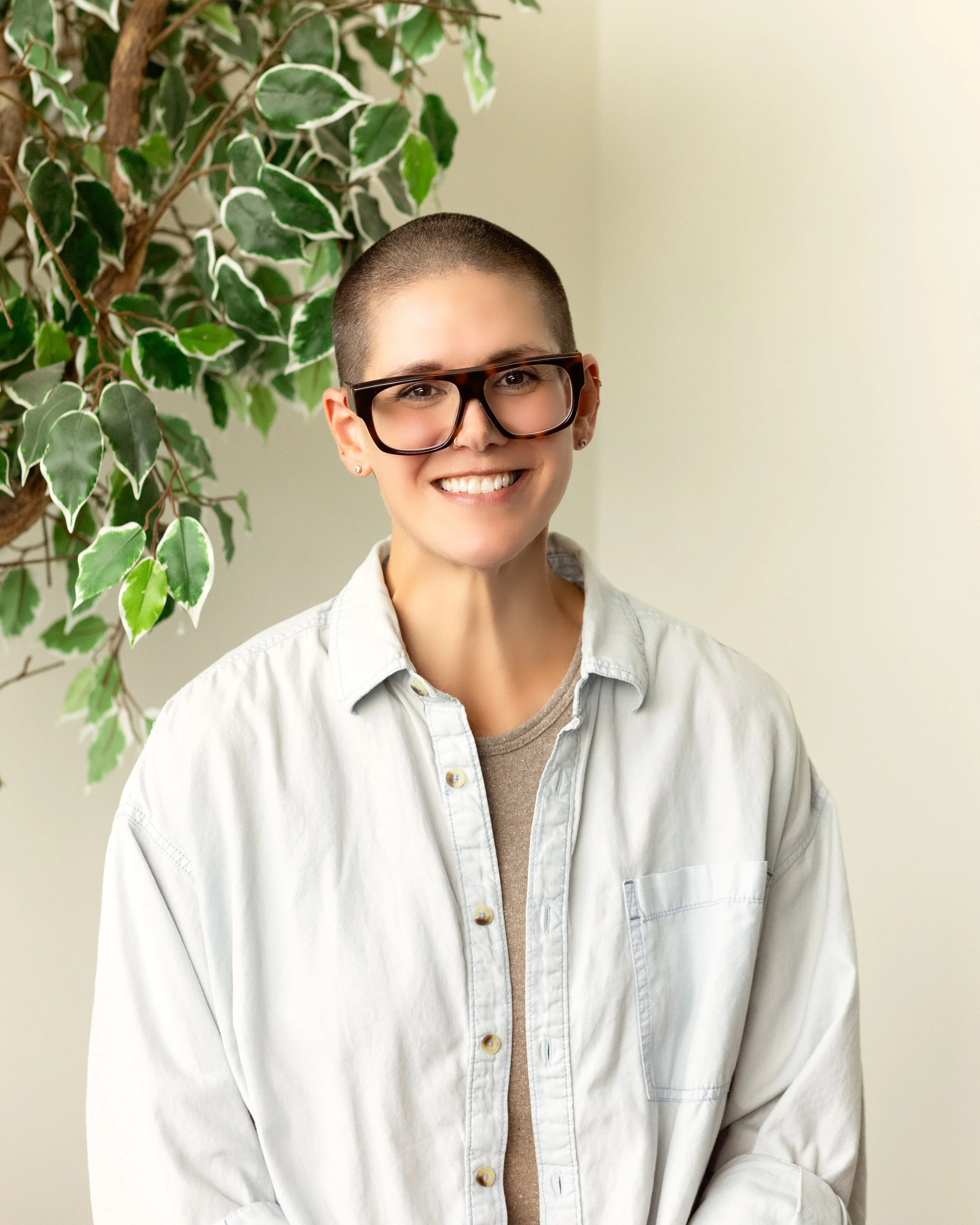
Shelby Kruse, LMHC (she/her)
In person and telehealth
“Trust takes time. Part of my job is to remind folks over and over again that slowing down and being tender with ourselves is essential to healing.”
My desire is for you to feel heard and understood in order to move towards more authentic and intentional living. I am playful, emotionally honest, and creative. I value close, caring relationships that build on trust, reflection, and action. I believe finding the right therapist is essential to the healing you are seeking. I’m not for everyone, and invite you to reach out if you have questions about what you see on this page or would like to schedule an initial session to see if we connect in the ways that are most important to you.
I am a Licensed Mental Health Counselor with a Masters Degree in Clinical Mental Health from Drake University. I’ve been working in the mental health counseling field for 3 years. Before going back to grad school, I spent over a decade as a yoga and meditation teacher. All of these experiences allowed me the privilege of working with a wide variety of bodies, minds, and personalities. Many of my clients are interested in investigating the connection between our physical bodies, our psychology, and our spiritual minds. We are holistic beings who often feel disconnected from parts of ourselves. I love working with people to help them come home to themselves with restored self-compassion and self-trust. My goal is to support the people I work with through curiosity, compassion, encouragement, and without judgement. I offer authenticity, accountability, humor, and invitations for depth and vulnerability.
Why Shelby?
Specialities
Identity exploration
Trauma of all kinds
Relationship challenges, past and present
Chronic stress, burnout, anxiety, depression
Transitional stressors
I am a relational therapist first and foremost, which means genuine connection between myself and the client is my top priority. Our relationship provides the foundation for a safe enough space for clients to explore the vulnerable spaces that might feel intimidating or even scary. Trust takes time to grow, and that often means therapy moves slower than client’s might prefer, and part of my job is to remind people over and over again that slowing down and being tender with ourselves is essential to healing.
I’ve completed training to use trauma-informed approaches including:
Internal Family Systems (IFS): IFS helps us understand the ways our internal world works, including parts of us that feel, think, and behave differently. What I love about IFS and parts work the most is the non-pathologizing approach to understanding ourselves and the belief that at our core, we all have the capacity for compassion, curiosity, and clarity of understanding. The pieces of ourselves that respond and react in ways that we might want to change are often doing so in an attempt to try to protect us from feeling pain, fear, or shame. IFS invites us into deeper relationship with ourselves, which also makes space for deeper relationships with others.
Emotionally-Focused Individual Therapy: Based in attachment science, emotionally focused individual therapy helps us to understand that our emotions are often signals rather than symptoms. When our emotions are big and overwhelming, we often respond with coping strategies that were helpful at one point in our lives, but aren’t really working anymore. Understanding, and processing our emotions helps us to better understand our inner world, and helps us negotiate relationships with our selves and with others with greater flexibility and compassion.
Eye Movement Desensitization and Reprocessing (EMDR): EMDR activates both sides of our body through eye movements, or more typically in my work with clients, we use handheld “buzzies” that emit an alternating vibration to help the brain engage in a new way. This stimulation allows us to work through and reprocess traumatic experiences impacting our bodies and belief systems.
Attachment Theory: As a relational therapist, I’m always interested in understanding people’s relationships, past and present. Attachment Theory highlights how our early relationships and experiences continue to shape the ways we navigate our relationships today. The strategies we used as children to find safety and security often follow us into adulthood. Understanding the circumstances under which we received love, affection, connection, as well as rejection, punishment, and disconnection, helps us to explore our relationship patterns, coping strategies, and emotions tied up in our experiences, and create new patterns of connection that allow for greater authenticity and more satisfying relationships.
In addition to mental health counseling specific trainings mentioned above, I am also an Experienced Registered Yoga Teacher (ERYT) with certifications in Trauma Informed Yoga and Prenatal Yoga, and I am a Certified Mindfulness Meditation Teacher. I enjoy using my background in yoga to incorporate mindfulness and meditation techniques with clients who are well-served by these approaches.
Therapeutic Approach
Insurances Accepted:
Wellmark Blue Cross Blue Shield
Midlands Choice
Cigna
Health Partners
Wellpoint
Molina
Iowa Total Care
shelbykruse@humantohumancounseling.com
515-650-1632, ext 1